
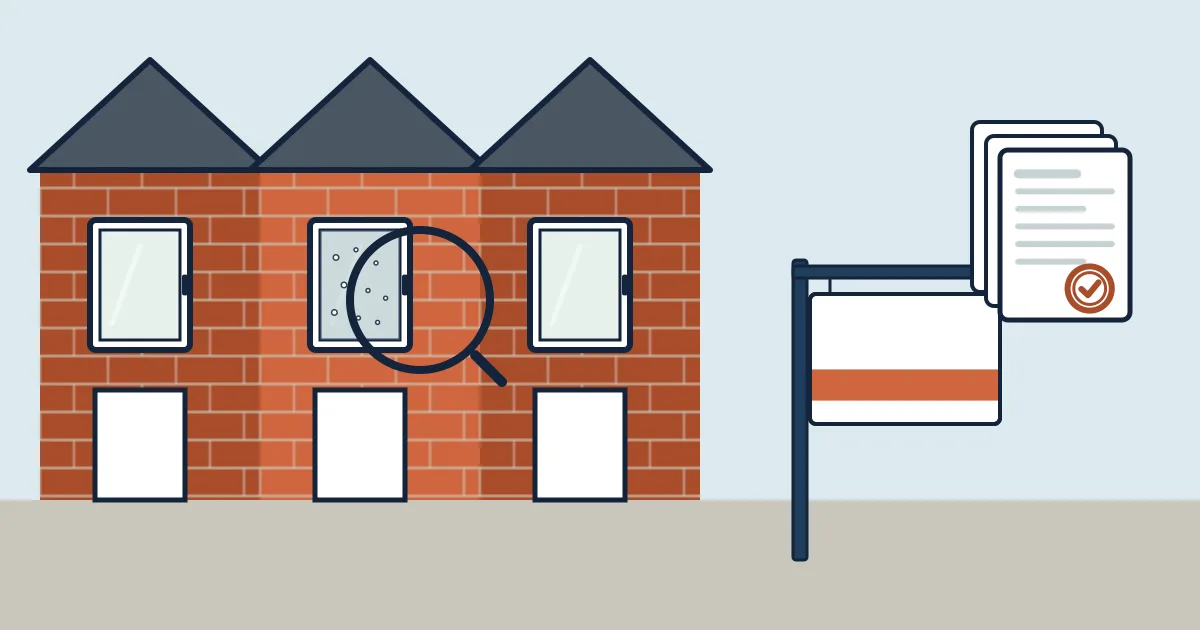
Windows are the part of a house survey that buyers read least, and they can cost the most to fix. Replacing every window in a typical house is a five-figure job. For double glazing replacement the range runs up to about £11,000 for a whole house, and timber sashes can cost far more. Looking at them properly before you exchange gives you a number to negotiate with.
What a survey tells you, and what it doesn't
A Level 2 or Level 3 survey will usually note the material and condition of windows, and may flag rot or failed seals. It will not usually test each one or price the work. You can add to it by making your own check at the second viewing. Take a torch, a screwdriver and a phone, and spend ten minutes on the windows alone.
A second-viewing checklist
- Misting or a milky film between the panes, which suggests failed units
- Soft timber sills and bottom rails, tested with a screwdriver tip
- Sashes that stick, will not stay up or have been painted shut
- Condensation marks, black mould or stains on the reveals and curtains
- Cracked glass, split uPVC corners and missing or perished seals
- Single glazing or secondary glazing left in older rooms
- Locks and keys, and whether every opener has working security
The paperwork
Ask the seller for evidence for windows fitted since 2002. Replacement windows in England are covered by building regulations, and a competent person scheme such as FENSA issues a certificate when the installer is registered. Without a certificate, the buyer's solicitor may ask for an indemnity policy or a retrospective approval from the council. Ask also for any guarantees and the installer's details, because guarantees are sometimes transferable.
If the house is in a conservation area or is listed, ask whether the windows have consent. Unconsented changes in those places can be a problem for the new owner, not only the old one. Your solicitor can check the local searches, and the council's planning pages show whether the property sits in a conservation area.
What the age of the house suggests
- Victorian and Edwardian terraces, as in Portsmouth and Southsea, often have sashes and bays that range from original timber to later uPVC copies.
- Georgian and period properties in places such as Winchester, Alresford and Petersfield may have listed status or sit in conservation areas.
- 1960s to 1980s estates, such as around Basingstoke and Andover, often still have early double glazing or aluminium frames.
- 1990s and 2000s estates tend to have uPVC windows of an age when sealed units begin to fail.
- Coastal houses and flats close to the Solent shore may show salt damage to hinges and handles.
Putting a price on it
Count the windows and doors, note which are sashes, bays or French windows, and use the cost calculator for a rough total. Failed glass in sound frames costs far less than complete windows. Sashes, bays and large doors are the dear items. Present the total to the seller with photographs, and ask whether they will reduce the price or contribute to the work. A seller may agree to a price cut, but not always.
Once you have a number, decide whether to replace now or live with the windows for a few years. A house with a few misted units can wait. A house with rotten timber windows or a failed bay should be priced into the offer.
After completion
Get at least three written quotes, with the same specification, and compare them. The double glazing replacement service covers units and windows, sash windows cover period homes, and casement windows are the usual choice for later houses. Check that each firm is registered with a competent person scheme.
Our signs checklist helps you survey the house after you move in, and the double glazing replacement cost guide sets out what each route costs.
How to check the windows before you buy
- Look at the survey
Read the survey for comments on window material, condition and any rot or failed seals.
- Do a second-viewing check
Take a torch and a screwdriver. Check each window for misting, soft timber, sticking sashes and damaged seals.
- Ask for the paperwork
Request certificates and guarantees for any windows fitted since 2002, and ask about consent in a conservation area.
- Price the work
Count the windows and use the cost calculator to get a rough total for repair or replacement.
- Use it in negotiation
Show the seller the photographs and your estimate, and ask whether they will adjust the price.
Frequently asked questions
Should old windows put me off buying a house?
Not on their own. Windows are a known cost that you can price and negotiate on. The problem is when they are ignored until after completion.
What is a FENSA certificate?
It is evidence that replacement windows were installed by a registered installer and comply with building regulations. Buyers' solicitors often ask for it when windows were fitted after 2002.
What if the seller has no certificate?
Your solicitor may suggest an indemnity policy or a retrospective application to the local council. Ask early, because it can delay exchange.
How much does a whole house of windows cost?
As a guide, double glazing replacement for a whole house runs up to about £11,000, and timber sashes can cost more. Use the calculator for a closer estimate.
Ready to talk to an uPVC casement windows specialist?
Get Free Quotes →