
What Are uPVC Casement Windows?
uPVC casement windows are windows whose opening sashes are hinged at the side or top, swinging outwards like a small door, set in a frame made from rigid, reinforced uPVC. They are the most common window style in Hampshire, fitted to everything from the 1950s council-built houses in Leigh Park and Harefield to the newer estates around Whiteley, Chandler's Ford and Basingstoke's outer edges. A typical casement combines one or more opening sashes with fixed panes, and sometimes a small top-hung fanlight for ventilation.
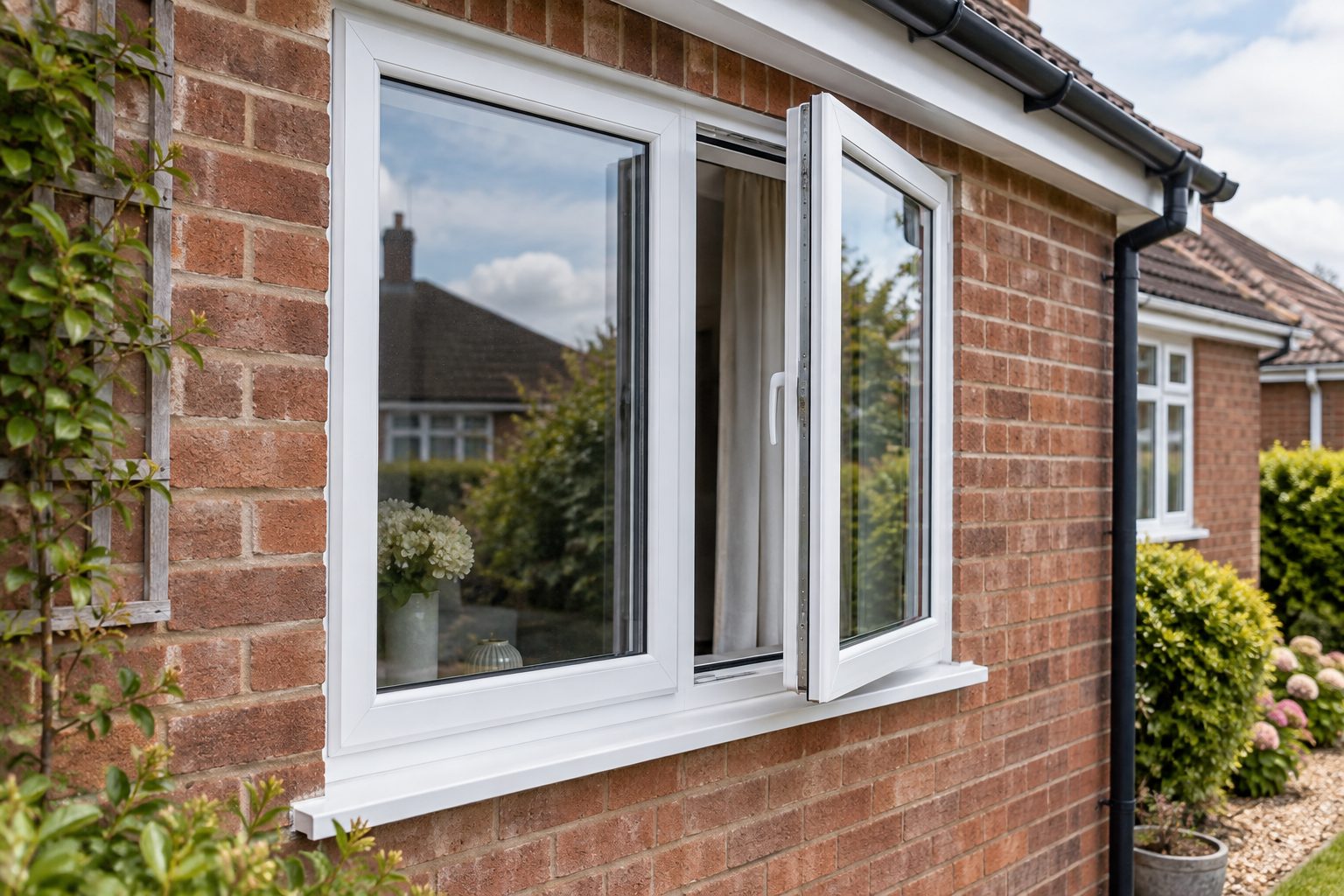
Most people replacing casements are swapping like for like: out with old timber, aluminium or first-generation uPVC casements, in with new ones of the same layout. It is also the moment to rethink how each window works. Deciding afresh which sashes open, which stay fixed and whether a flush profile would suit the house often makes more difference than the colour.
Signs You Need New uPVC Casement Windows
- Sashes have dropped on their friction hinges and now scrape the frame or need lifting to close
- The espagnolette lock no longer engages its keeps, so the window will not pull tight
- Rubber gaskets have shrunk or hardened, leaving a visible gap and a draught along the sash edge
- White frames from the 1990s have turned yellow or grey and will not clean up
- The glazing layout blocks the view, with a heavy transom right at eye level
- An upstairs bedroom window is too small or wrongly hinged to serve as an escape route
Casement Styles and Options
The name covers several quite different-looking windows:
- Chamfered casements. The standard modern profile, with bevelled edges and the sash sitting slightly proud of the frame. It is the lowest-cost option and suits most post-war and new-build houses.
- Sculptured (ovolo) casements. Rounded, moulded edges that soften the look and sit better on 1930s semis and older brick houses.
- Flush casements. The sash closes level with the outer frame, mimicking traditional timber joinery. Popular for cottages and period houses where a standard profile would look bulky.
- Top-hung and side-hung combinations. Side-hung sashes give the biggest clear opening; top-hung vents above let air in during light rain.
- Egress (escape) hinges. These let a side-hung sash swing out wide enough to climb through, which matters for upstairs habitable rooms.
- Colours and finishes. White, cream, grey and black are common, along with woodgrain foils such as golden oak or rosewood. Dual colour (white inside, grey outside) is widely available.
What to Include When Asking for a Quote
Count the casements room by room and note which panes open now and which you would like to open in future. A three-bed semi might have eight or nine windows, but they are rarely all the same size or layout, and the price depends on the number of opening sashes more than the number of frames. If a window above a stairwell or a flat roof needs ladders or a tower, mention it.
Say which upstairs bedrooms your household would use as an escape route in a fire, and ask the installer to confirm that the new sashes will open wide enough on egress hinges. For windows reachable by small children, ask about child-safety restrictors that can be overridden by an adult. On south-facing elevations in Portsmouth or Southampton that catch the afternoon sun, ask whether the proposed glass includes a solar-control coating.
A good written quote for casements should list each window's opening configuration, the profile name and style (chamfered, sculptured or flush), colour on each side, glass make-up, hinge and lock type, trickle vents, and whether new external cills and internal window boards are included.
How Much Do uPVC Casement Windows Cost?
| Job size | Typical cost |
|---|---|
| One small white casement, such as a bathroom or kitchen window | £300 – £700 |
| Front or rear elevation of a semi, four to five windows | £2,200 – £4,000 |
| Whole house, eight to ten casements in white or a single foil colour | £4,500 – £6,500+ |
These are indicative supply-and-fit budgets, not quotations. Flush profiles, dual colours and larger or bespoke sizes add to the price, as do scaffolding and repairs to the surrounding brickwork. Confirm the total including VAT, removal of the old frames and making good.
The Casement Replacement Process
- Survey. Each opening is measured and checked for square, and you agree the layout, profile, colour and glass for every window.
- Manufacture. Frames are welded to size. White casements are usually quickest; foils and dual colours tend to take longer.
- Removal. On the day, old sashes and glass come out first, then the outer frame is cut free and the reveal is cleaned.
- Fitting. The new frame is packed level, fixed back to the masonry, glazed and beaded, and the gap around it is filled with expanding foam or insulation.
- Finishing and handover. Cills, trims and sealant go on, sashes are adjusted to close evenly, and the installer shows you the locks, vents and restrictors before registering the job.
Planning Permission and Building Regulations
Replacing casements on a house with windows of similar appearance is normally permitted development, so no planning application is needed. The position changes for flats and maisonettes, listed buildings, and homes in conservation areas covered by an Article 4 direction, which apply in several Hampshire towns and villages. Parts of the county also sit inside the New Forest and South Downs National Parks. If any of these apply, check with the planning authority before ordering. The Planning Portal gives an overview.
Replacement windows must meet the Building Regulations for energy efficiency, ventilation, safety glazing and, where relevant, means of escape. An installer registered with a competent person scheme such as FENSA or Certass can self-certify the work and send you a certificate afterwards. Keep it safe, because a buyer's solicitor will ask for it.
How to Choose a Casement Window Installer
- Which profile system will you use, and can I see a corner sample in the colour I want?
- Will the upstairs sashes have egress hinges, and do the openings meet escape requirements?
- What locking hardware do you fit, and are the windows tested to PAS 24?
- Are frames, sealed units, hardware and fitting guaranteed separately, and for how long?
- Will you register the job with FENSA, Certass or another scheme?
- How is my deposit protected if something goes wrong before fitting?
Frequently Asked Questions
What is the difference between a flush casement and a standard casement?
On a standard casement the opening sash overlaps the outer frame, so it sits slightly proud when closed. On a flush casement the sash closes level with the frame, which looks closer to traditional timber windows. Flush casements usually cost more.
Can I change which panes open when I replace my casements?
Yes. Each window is made to order, so you can choose which sashes open, which stay fixed and which way they are hinged. Keep escape requirements in mind for upstairs rooms, and remember that opening sashes cost more than fixed panes.
Do upstairs casement windows need to be fire escape windows?
Where a window is needed as an escape route from an upstairs room, the replacement should not make escape worse than before. Egress hinges help side-hung sashes open wide enough. Ask your installer to confirm which windows this applies to.
How long do uPVC casement windows last?
Well-made uPVC casements commonly last 20 to 30 years or more. Hinges, gaskets and locks usually wear out before the frames, and these parts can often be replaced to extend the life of the window.