
What Are Sliding Sash Windows?
Sliding sash windows are windows with two sashes, one above the other, that slide vertically past each other in a box frame. They were the standard window in British houses from the Georgian period until the early twentieth century, and Hampshire has a great many of them: the Victorian terraces of Southsea, Fratton and Portswood, the Georgian townhouses in Winchester, Alresford and Lymington, and the villas of Petersfield and Romsey.
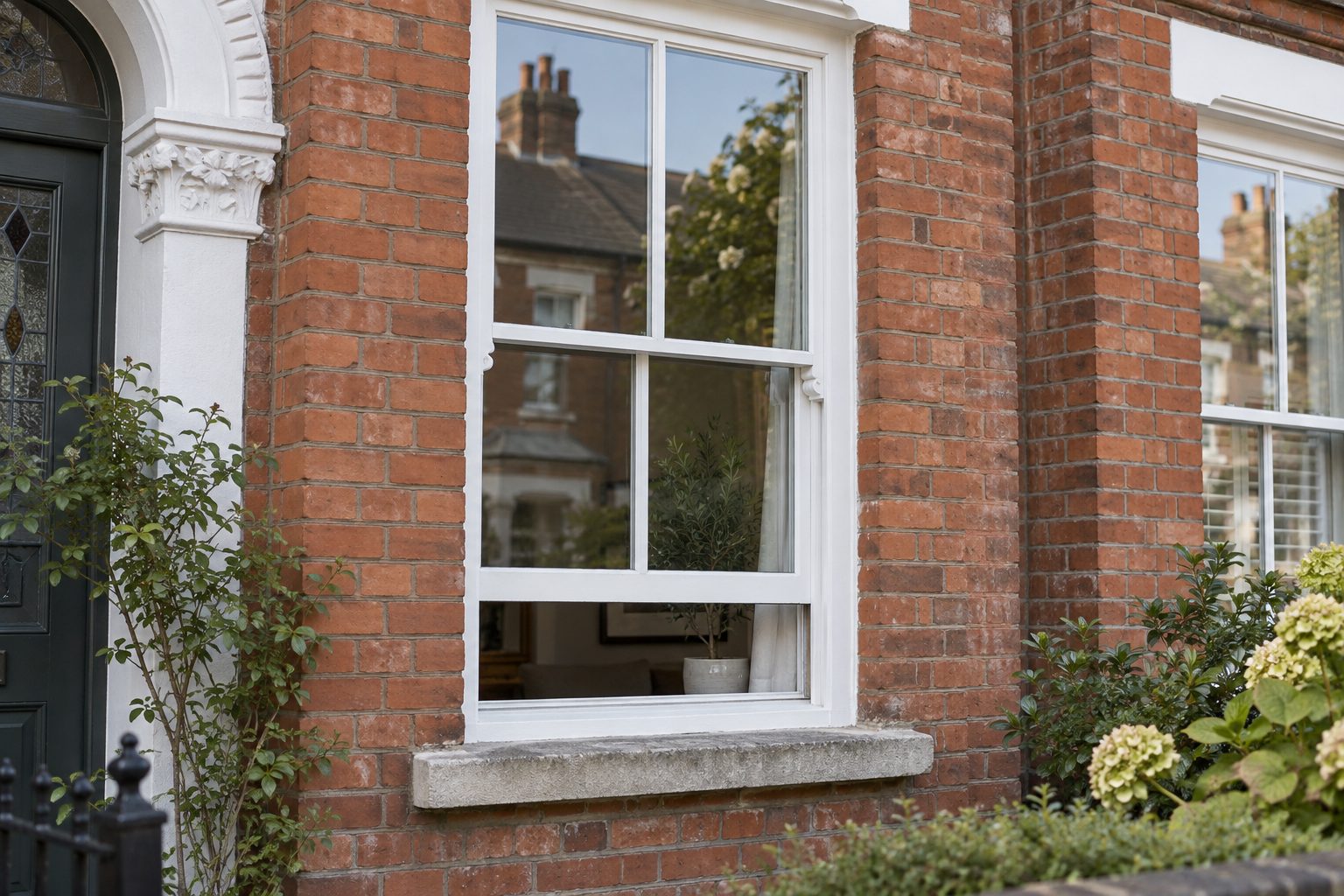
Replacement sliding sash windows come in two main forms. uPVC vertical sliders copy the traditional look with a modern frame and spring balances, while timber sashes are made in the traditional way, often with slim double glazing. Which one is right depends on the house, the budget and any planning restrictions.
Signs You Need Sliding Sash Replacement
- Sash cords have snapped, so a sash drops or has to be propped open
- The sashes rattle in the wind or let in a steady draught through the meeting rails
- Timber has rotted at the bottom rails, the sill or the lower parts of the box frame
- Paint has built up so thickly that the sashes stick or will not move at all
- Single glazing leaves the front rooms cold and noisy on a busy road
- An earlier replacement with modern casements has spoiled the look of a period frontage
Sash Window Options Explained
- uPVC vertical sliders. The lowest-cost route. Look for run-through sash horns, slim meeting rails and woodgrain foils for a more authentic look. Spiral or block-and-tackle balances replace the old cords and weights.
- Timber replacement sashes. New timber box frames and sashes, usually factory-finished and double glazed, with traditional cords and weights or modern spiral balances.
- Sash-only replacement. Where the box frame is sound, a joiner can make new double glazed sashes to fit the existing frame, keeping more of the original window.
- Slim or vacuum glazing. Thin insulating glass units that fit into slender traditional glazing bars, useful where the look must stay close to the original.
- Refurbishment and draught-proofing. Not a replacement, but often worth considering: overhauling the sashes, renewing cords and adding brush seals.
- Glazing bars. Two-over-two, six-over-six and one-over-one layouts are all possible. Bars can be structural or stuck on to the glass.
What to Include When Asking for a Quote
Tell installers the age and style of the house, and describe the glazing pattern of the existing sashes, such as two-over-two or six-over-six. Say whether the sashes have horns (the small projections at the bottom of the top sash) and whether any original crown glass or decorative detail survives. Photos of the whole front elevation, not just one window, help an installer see what the new sashes need to match.
Be clear about whether the house is listed, in a conservation area or subject to an Article 4 direction. Many Victorian streets in Portsmouth, Southampton and Winchester have them, and in those places the planning authority may expect timber sashes that closely match the originals. Say whether you would consider keeping the box frames and replacing only the sashes, or whether you want complete new windows.
A good sash quote should state the material, how the sashes are balanced, the glass thickness and type, the glazing bar style, the finish and number of coats for timber, and whether internal linings, shutters, architraves or plaster will be disturbed and made good.
How Much Do Sliding Sash Windows Cost?
| Job size | Typical cost |
|---|---|
| One uPVC vertical slider in white | £900 – £1,600 |
| Front of a Victorian terrace, three to four uPVC sliders or two timber sashes | £3,500 – £7,000 |
| Whole house of double glazed timber sashes | £8,000 – £15,000+ |
These are indicative figures, not quotes. Timber sashes typically cost considerably more than uPVC. Scaffolding for upper floors, repairs to stone or brick surrounds, and heritage details such as horns and fine glazing bars all affect the final price.
The Sash Window Replacement Process
- Survey. The installer measures each opening, notes the glazing pattern and checks the condition of the box frames, sills and surrounding brickwork.
- Consent and design. Where needed, planning or listed building consent is obtained before anything is ordered, and drawings are agreed.
- Manufacture. uPVC sliders take a few weeks; bespoke timber sashes can take considerably longer.
- Installation. The old sashes and box frame come out (or just the sashes, for sash-only work), the new window is fitted, sealed and the linings made good.
- Finishing. Balances are adjusted so each sash stays where it is put, locks and restrictors are fitted, and timber is finished as agreed.
Planning Permission and Building Regulations
Replacing sash windows on a house with windows of similar appearance is usually permitted development. However, swapping timber sashes for uPVC can change the appearance enough to matter in a conservation area, and many Hampshire conservation areas have Article 4 directions that remove permitted development rights for front windows. Listed buildings need listed building consent for almost any change to windows. Check with the planning authority before ordering; the Planning Portal's windows and doors guidance covers the general rules.
Replacement sashes must meet the Building Regulations for thermal performance and safety, and most installers self-certify through FENSA or Certass. Some joinery firms making timber sashes may use a different route, so ask how the job will be certified.
How to Choose a Sash Window Specialist
- Do you make timber sashes yourselves, or buy in uPVC vertical sliders from a fabricator?
- Can you match my existing glazing bar pattern, horns and meeting rail sizes?
- Have you fitted windows in conservation areas or listed buildings before?
- Would you recommend refurbishing any of my existing sashes instead?
- How are the sashes balanced, and how long is the balance mechanism guaranteed?
- Who handles any planning or listed building consent application?
Frequently Asked Questions
Are uPVC sash windows allowed in a conservation area?
It depends on the area. Where an Article 4 direction applies, replacing front windows may need planning permission, and the council may expect timber. Check with your local planning authority before ordering uPVC sashes.
Can I keep my box frames and only replace the sashes?
Often yes, if the box frames are sound. New double glazed sashes can be made to fit existing frames, which keeps more of the original window and can reduce disruption.
Do double glazed sash windows still use weights and cords?
Timber sashes can still use weights and cords, sometimes with heavier weights to balance the double glazing. uPVC sliders and many modern timber sashes use spiral or spring balances instead.
How long do timber sash windows take to make?
Bespoke timber sashes usually take longer to manufacture than uPVC sliders, often several weeks or more. Any planning or listed building consent needed must be in place before ordering.