
What Are Tilt and Turn Windows?
Tilt and turn windows are inward-opening windows with a single handle that controls two opening modes. Turn the handle one way and the top of the sash tips into the room a few inches for ventilation; turn it the other way and the whole sash swings inwards on side hinges like a door. Originally a German and Scandinavian design, they are now made in uPVC by most UK fabricators and are increasingly common in Hampshire flats, loft conversions and modern houses.
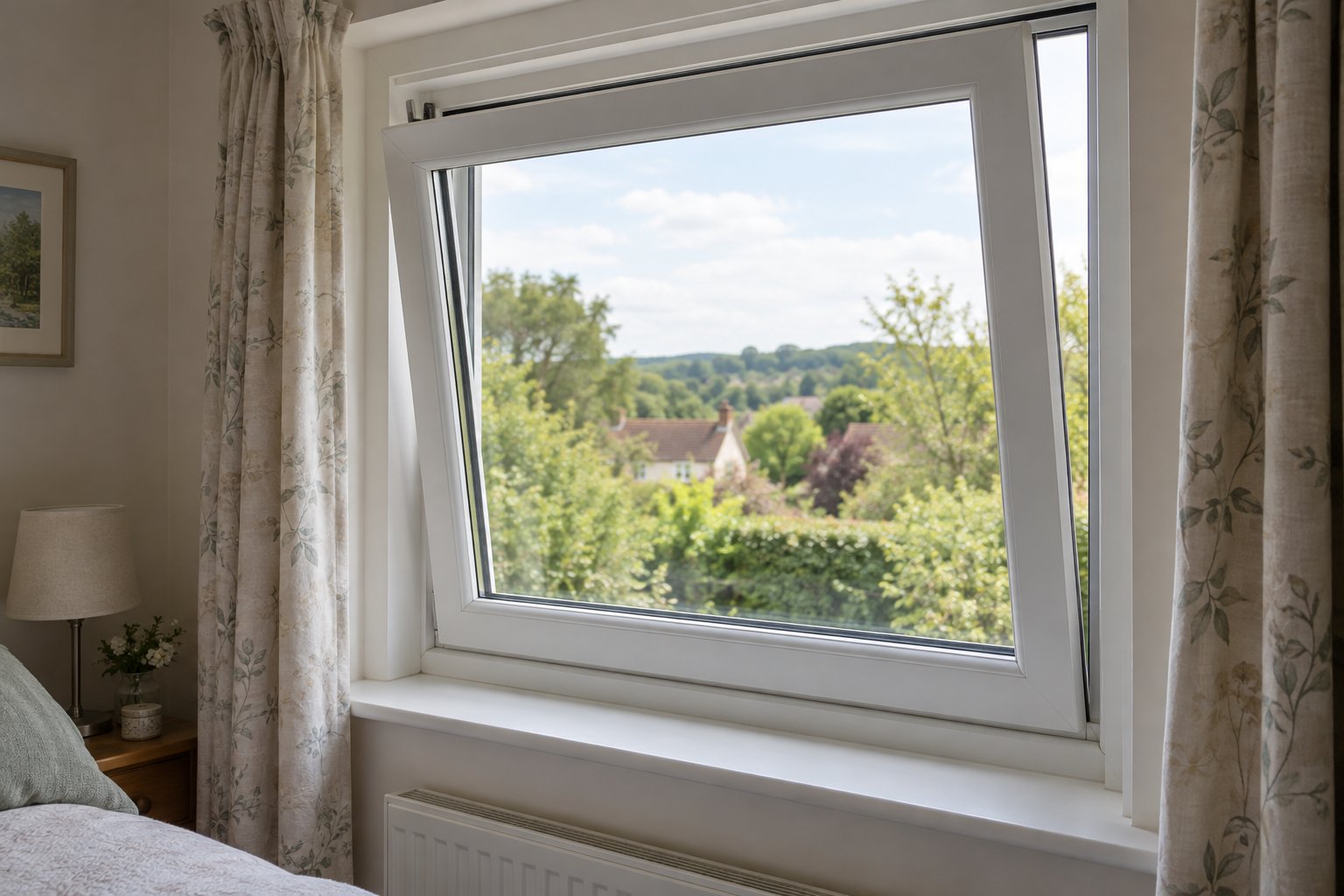
Because the sash opens into the room, both sides of the glass can be cleaned from inside. That makes tilt and turn windows popular in high-rise and upper-floor flats around Southampton's city centre and Gunwharf, where there is no easy way to reach the outside. The fully open position also gives a large, clear opening, which is useful where a window has to serve as a fire escape.
Signs Tilt and Turn Windows Could Suit Your Home
- You live in a flat or upstairs room where the outside of the glass is hard or unsafe to clean
- A loft room or dormer needs a window large enough to act as an escape route
- You want a ventilation position that does not swing out over a path, while following the product’s security instructions
- Outward-opening casements catch on a walkway, balcony or neighbouring wall
- Your existing tilt and turn windows have worn gearing, so the sash drops or the handle jams between modes
- The building's management or fire strategy asks for a particular opening type
Tilt and Turn Options Explained
- Turn-first. Common hardware turns the sash inwards at the first handle position and tilts it at the next. Ask for a demonstration of the supplied system.
- Tilt-first. The first opening position provides tilt ventilation. Some systems use a key to control access to the full-turn position; confirm the exact operation and suitability for the room.
- Child-safe and lockable handles. Key-locking handles or restrictors can limit the window to the tilt position.
- Fixed side lights. A tilt and turn sash is often paired with fixed panes to fill a wide opening.
- Balcony and door-height versions. Tilt and turn doors work on the same principle for Juliet balconies and small terraces.
- Colours. White, grey and black frames are common; dual colour lets the inside match the room while the outside suits the building.
The operating sequence depends on the hardware. The REHAU operation and maintenance guide illustrates why you should use the instructions supplied with your own windows.
What to Include When Asking for a Quote
Describe what sits in front of each window inside the room. Because the sash swings inwards, radiators, deep window boards, blinds, curtains and furniture can all get in the way. Mention the depth of the window board and whether you have fitted blinds on the frame, so the installer can check the sash will clear them or suggest a different layout.
If a window needs to work as a fire escape, say which room it serves and how high the bottom of the opening is from the floor. For flats, tell the installer whether the freeholder, managing agent or a fire strategy for the building has requirements for window type, colour or opening restrictions, and whether you have their permission yet. High-level flats may also need specialist access or cradle work.
A useful quote will confirm the handle sequence (tilt-first or turn-first), the clear opening size when fully open, the type of hinge and gearing, any restrictors, and how the new frames will be fixed and weatherproofed on an upper-floor or exposed elevation.
How Much Do Tilt and Turn Windows Cost?
| Job size | Typical cost |
|---|---|
| One standard tilt and turn window, such as a bedroom or loft window | £450 – £1,100 |
| Two-bed flat, four to six windows | £2,500 – £5,000 |
| Whole house or larger flat with doors and side lights | £5,000 – £7,500+ |
These figures are a guide only. Tilt and turn sashes usually cost more than a side-hung casement of the same size because of the extra gearing. Access equipment for upper floors, coloured frames and door-height units increase the price.
The Tilt and Turn Installation Process
- Survey. The installer measures each opening and checks the inside clearances, escape needs and access for fitting.
- Specification. You confirm handle sequence, colour, glass, restrictors and any fixed panes.
- Manufacture. Frames and gearing are made to order, usually within a few weeks.
- Fitting. Old frames come out, the new window is fixed, glazed and sealed, often working from inside on upper floors.
- Adjustment. Tilt and turn sashes need careful setting so the sash closes evenly in both modes. The installer shows you how to use and lock them.
Planning Permission and Building Regulations
Changing from outward-opening casements to tilt and turn windows usually has little visible effect from outside, and replacing windows on a house is normally permitted development. Flats are different: they do not have the same permitted development rights, and your lease may require the freeholder's consent. Listed buildings and conservation areas with Article 4 directions also need checking. See the Planning Portal for background.
Where a window is an escape route, Approved Document B sets minimum clear opening sizes and a maximum sill height, and replacement windows should not make escape worse than before. The Approved Document B page on gov.uk has the full guidance. A competent person scheme installer can self-certify most replacement work.
How to Choose a Tilt and Turn Installer
- How often do you fit tilt and turn windows, and which hardware brand do you use?
- Will the fully open sash clear my radiator, window board and blinds?
- Does the clear opening meet escape requirements for this room?
- Can you fit restrictors or lockable handles for children's rooms?
- Have you worked in flats before, and will you liaise with my managing agent?
- What is the guarantee on the gearing and hinges, not just the frame?
Frequently Asked Questions
Are tilt and turn windows secure?
A correctly specified window can provide good security when closed and locked. The tilt position is still open and should not be assumed secure; follow the manufacturer’s instructions and ask about tested performance for the exact product.
Can tilt and turn windows be used as fire escape windows?
They are often chosen for escape because they open fully inwards and give a large, clear opening. The window still needs to meet the minimum opening size and sill height for escape, which the installer should check.
Do tilt and turn windows get in the way of curtains and blinds?
Because they open inwards, they can clash with deep window boards, radiators and some blinds. Blinds fitted to the sash itself, or curtains on a pole above the frame, usually work best.
Are tilt and turn windows more expensive than casements?
Usually a little, because the hardware is more complex. The difference is often worthwhile in flats and upper floors where cleaning from inside and a large escape opening matter.